The signals engine: finding the companies that need you this quarter
Most outbound fails on timing, not copy. Here is how we score accounts on why now, and the one rule that keeps the system honest.
Most cold outreach is not bad. It is early.
The message lands on someone who might need you next year. They delete it today. You call it a bad list or a bad subject line, and you write another sequence.
The signals engine exists to fix the timing. It watches for moments when a company is likely to buy, scores every account, and tells you who to call and why now.
What counts as a signal
We started with a list of beliefs about what makes a company ready, and gave each one a strength.
- A new VP of Sales or CRO in the last 90 days. Strong. A new revenue leader needs pipeline fast.
- A recent funding round. Strong. New money comes with a growth plan.
- A company expanding into the U.S. with no local network. Strong.
- A founder still doing their own outbound. Strong. That is the classic buyer.
- Hiring SDRs or AEs. Medium. It shows outbound demand, and sales hiring is one of the clearest buying signals there is.
- A new COO or CTO, or an outdated website. Weak on their own.
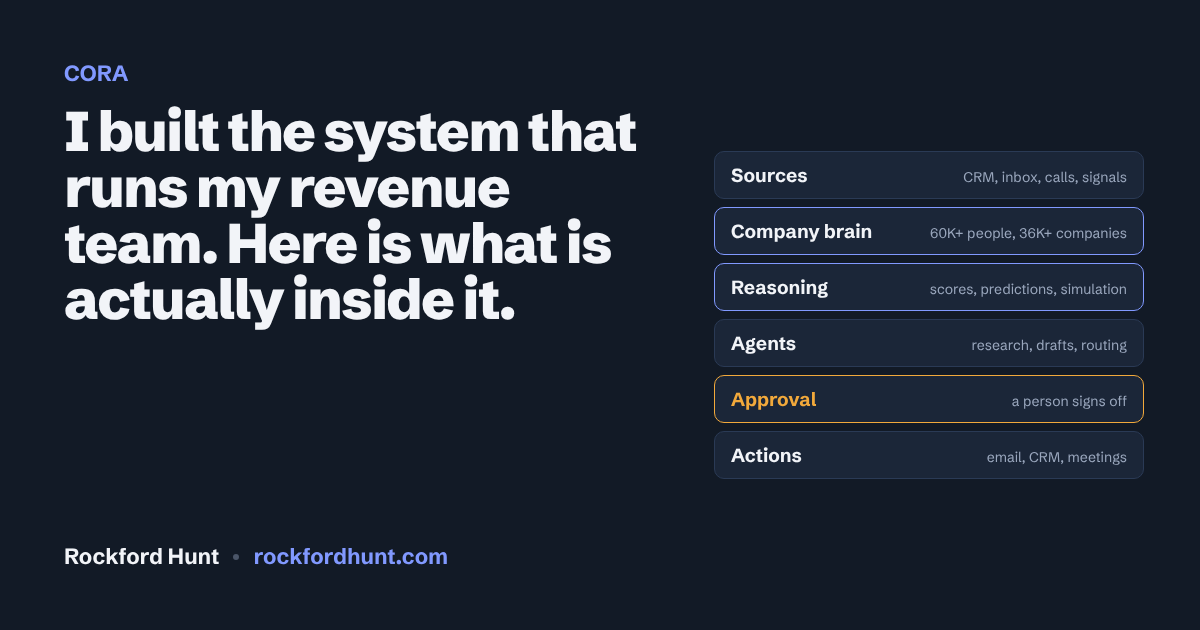
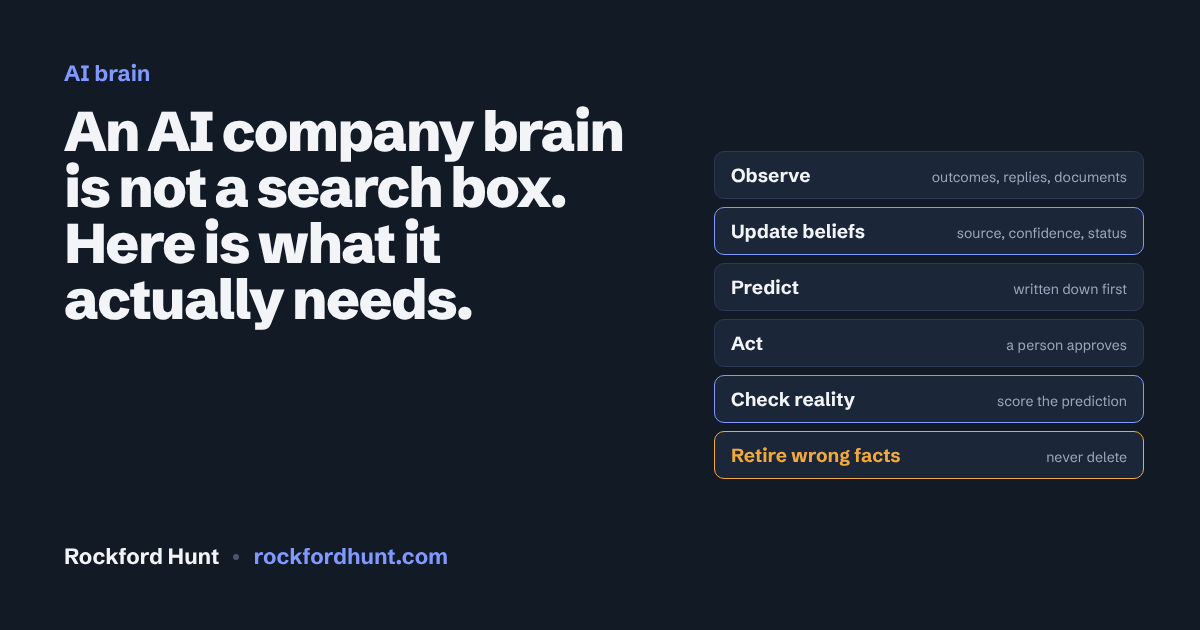
Notice the word beliefs. None of these are treated as facts. Each one starts as a hypothesis and moves from untested to testing to supported or contradicted, based on what actually happens when we reach out. That claim and evidence approach runs through all of CORA.
How an account gets scored
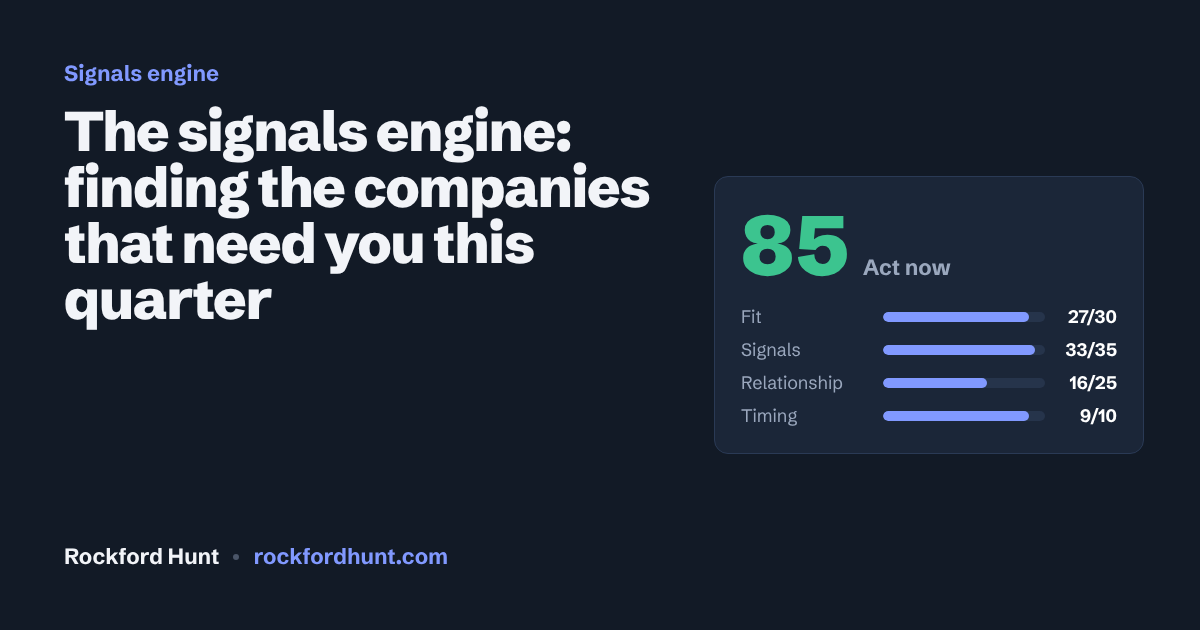
Every account gets a score out of 100, built from four parts: fit with the ideal customer, 30 points; live signals, 35 points; relationship, meaning any warm path in, 25 points; timing, 10 points.
Above 80, act now. Between 60 and 80, it is worth a sequence. Below that, the engine keeps watching. The score always comes with its reasons, in plain language, so a rep can disagree with it intelligently. Accounts above the line feed the automated flows that draft the first touch for a rep to approve.
The rule that keeps it honest
Here is the trap every signal system falls into. You email a company. They open it. The system sees activity and scores them higher. You email them again. More activity. The system is now congratulating itself for its own outreach.
So we made a hard rule: "we emailed them" can never count as a signal. Opens are stored but never scored. Only real responses move a score: replies, clicks, meetings. Negative replies and unsubscribes suppress the account everywhere.
It sounds obvious written down. It took a few wrong turns to get there.
What the data actually said
When we measured our outbound across more than 120,000 people, the biggest finding was not about signals at all. It was about the offer.
One message, positioning SalesDriver as an on-the-ground U.S. sales arm for firms outside the U.S., drew a 2.25% human reply rate across 45,000 people. Every other angle averaged well under 1%. The mechanics barely mattered: sequence length, showing a price, delivery. The offer and the audience did. It is also why we check every campaign before it sends.
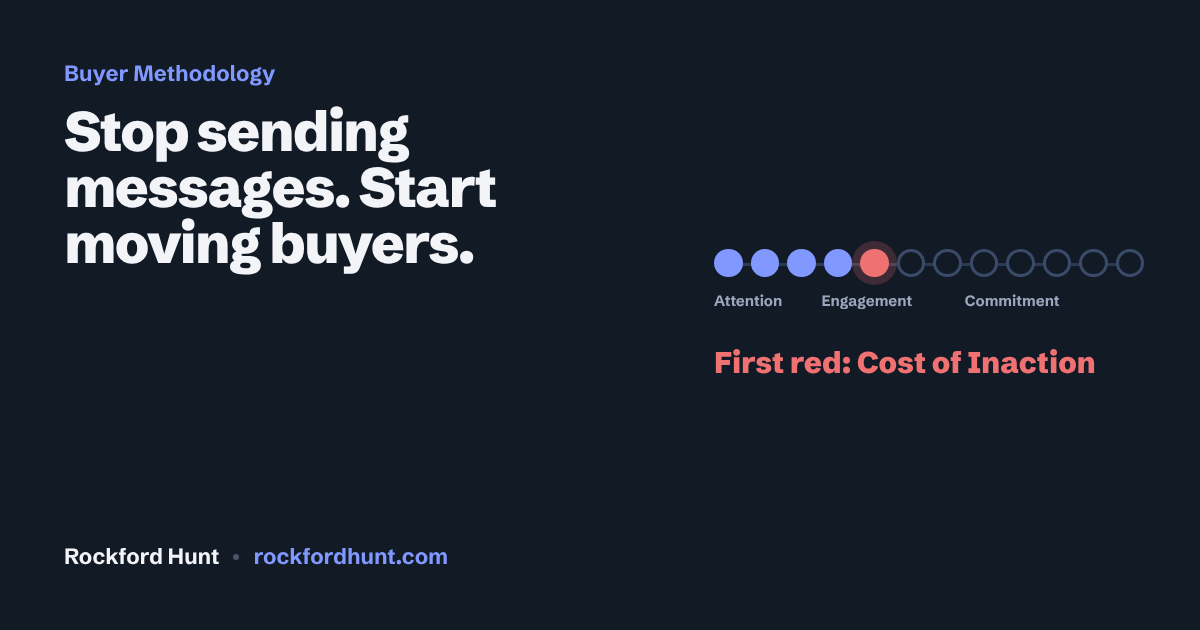
Timing is not a new idea. It is the Decision Trigger, driver eleven in Buyer Methodology. The engine just watches for it at scale.
That is what a signals engine is really for. Not to find more people. To find the right moment and the right reason, and then to tell you honestly which of your ideas worked.
Where it goes next
We source signals from public news and company data, and we never scrape personal profiles on social networks. Sales hiring data is a priority, because a company posting six SDR roles is telling you its plan in public.
The signal desk demo on the home page runs on sample accounts, but it is the same scoring logic. Click an account and you will see exactly why it ranks where it does.
Questions people ask
What is a buying signal in B2B sales?
A buying signal is a public event that makes a company more likely to buy now, such as a new sales leader, a funding round, sales hiring, U.S. expansion or a tech change. Rockford Hunt's signals engine treats each one as a hypothesis and tests it against real responses.
How does the signals engine score accounts?
Each account gets a score out of 100 built from fit with the ideal customer (30 points), live signals (35), relationship or warm path (25) and timing (10). Scores above 80 mean act now; 60 to 80 is worth a sequence.
Why shouldn't email opens count as a buying signal?
Because the system caused them. If outreach activity raises a score, the system ends up rewarding its own emails. Only real responses, such as replies, clicks and meetings, should move a score.
I'm Rockford Hunt. I've spent 20+ years in B2B sales, I founded SalesDriver, and I'm open to CRO and VP of Sales roles.
Contact RockTry the AI labResume